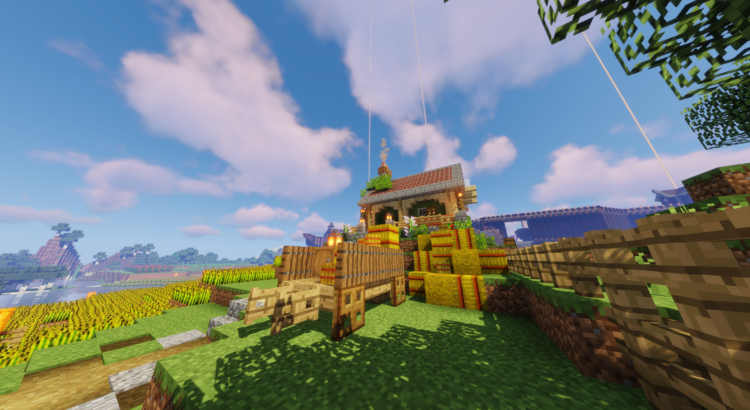
If you love single-player survival but wish your builds had an audience, you don’t have to choose between an empty world and a crowded server. Small, whitelisted survival servers let you play exactly the way you do alone — your own base, your own projects, your own pace — inside a world where other people exist. Here’s what that’s like and how to find it.
There’s a particular kind of Minecraft player. You’ve finished the megabase. The sorting system works. The villager hall is optimized, the terraforming is done, and it’s genuinely good — and the only person who will ever walk through it is you.
Single-player survival is the purest version of the game, but it has a quiet flaw that gets worse the better you get: nobody sees any of it. Screenshots to a subreddit aren’t the same as someone walking through your front gate and saying “wait, how did you do this?”
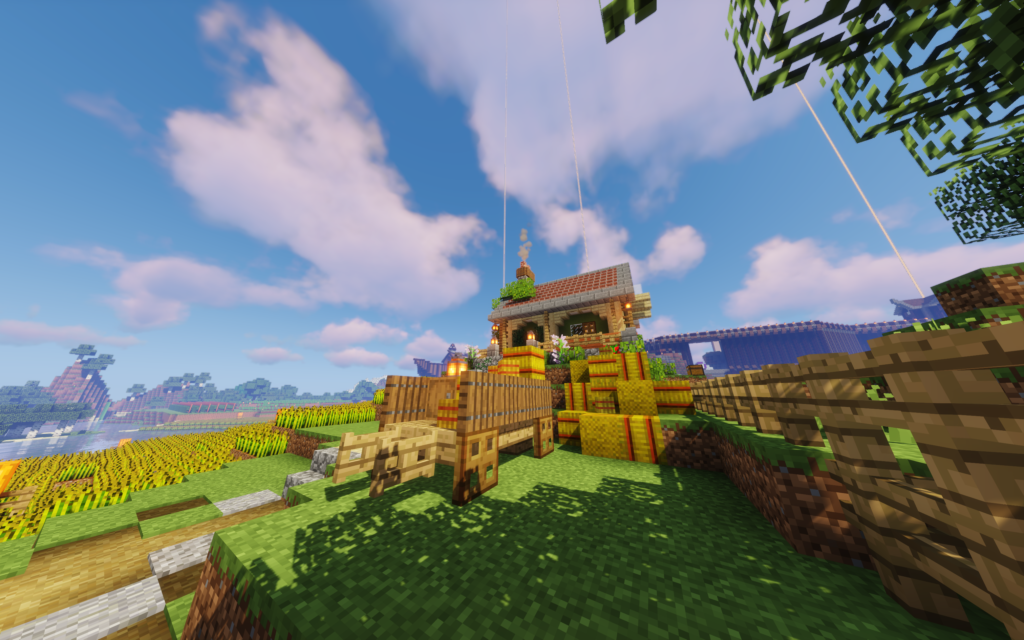
The usual advice is “join a server,” and if you’ve tried it, you know why that advice fails. Big public servers are the opposite problem: chat scrolling too fast to read, land claimed in every direction, economies and ranks and kits layered over the game until it stops feeling like Minecraft, and a spawn area radiating pressure to buy something. You didn’t want a second job. You wanted your world, with people in it.
The third option
Between those extremes is a category that doesn’t advertise loudly, because it doesn’t need volume to survive: small and mid-sized whitelisted survival servers where most members play essentially solo — but in the same, shared, persistent world.
Here’s the shape of it. You apply, get whitelisted, and spawn into a world that’s been growing for years. You walk (or ride a rail line someone built) away from spawn until you find a place you like — no land claims, no plots, just distance and taste. You build your base the same way you would alone. Chat murmurs along in the background; someone’s fighting the dragon, someone’s asking whether anyone has spare deepslate. You mute it or you don’t.
And then, when the base is done, the part single-player can never give you: you post coordinates, and people come look. They leave signs. They ask questions. Your build becomes a place other people know about — a landmark on the live map, a stop on the rail network, a thing that exists in a world that isn’t only yours.
What “solo, together” looks like in practice
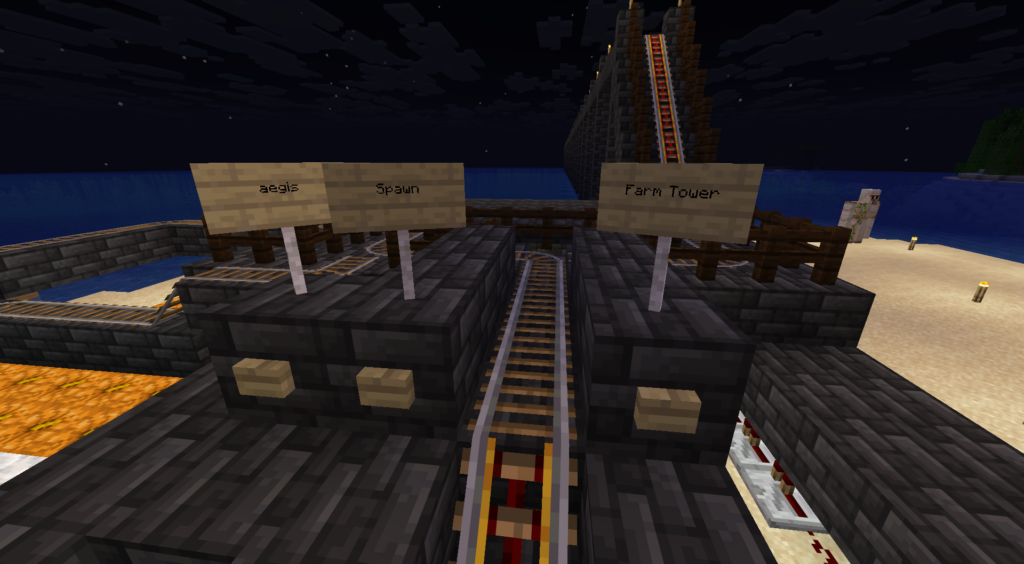
On our server, most members build alone most of the time. That’s not a failure of community — it is the community. The shared layer sits on top of everyone’s individual game: a live 3D map where every base in the world is visible, so exploring other people’s builds is a pastime in itself; a player-built rail network connecting towns and bases across continents, which you can extend to your own front door; towns and themed villages for the days you do feel like building near people; build contests where the community votes on designs, and the winners get constructed at spawn; hidden challenges and player-made dungeons scattered through the world, built by members for members to find.
Every one of those things is opt-in. Nobody will recruit you, tax you, or wonder why you’ve spent three weeks alone in a jungle. But the day you finish something worth showing, there’s someone to show it to.
Why the shared world has to be permanent
This playstyle only works if the world persists. A solo builder’s investment horizon is measured in months and years, and a server that resets every season is structurally incompatible with it. That’s why world policy is the first thing to check before joining anywhere [link Post 1], and why we’ve kept ours simple: running continuously since 2013, no world border, new worlds only when Minecraft’s own generation changes force it — with old worlds archived and builds historically imported into the new one by staff on request.
Is this you?
If you finish reading server descriptions and think “that sounds exhausting,” if your favorite part of the game is the hundred quiet hours between milestones, if you’ve ever wished exactly one person could see the thing you just built — then yes, probably. The application takes five minutes [link to whitelist form]. The world’s been waiting since 2013.
FAQ
Can you play Minecraft multiplayer like single player? Yes. On small whitelisted survival servers with no land claims and minimal plugins, day-to-day play is nearly identical to single-player survival — you simply share the world, chat, and map with other people, all of it optional.
Do I have to join group projects on a community server? On ours, no. Most members build solo. Towns, the rail network, contests, and events are all opt-in.
Won’t other players grief my base? On a whitelisted server the risk is already low, and everything is logged — staff can roll back any damage. See how rollback-based anti-grief works [link Post 4].
How do I find my own space to build? There’s no world border here, so you pick a direction and go until you like what you see. Distance is the only claim system you need.